
Media Research Project

“The primary objective of the ADC-RI Media Research Project is to research, track, and document anti-Arab and Islamophobic bias in the media, public discourse, and from public officials. This tracking project will serve as a resource tool which will highlight the prevalence of bias and bigotry. The project will expose xenophobia and hatred that target minorities in the U.S., particularly Arab and Muslim Americans.
The project will also celebrate achievements of Arabs and Muslims from around the world.”

Search
Generic filters

   Try these: RacismIslamophobiaAnti ArabAnti Islam

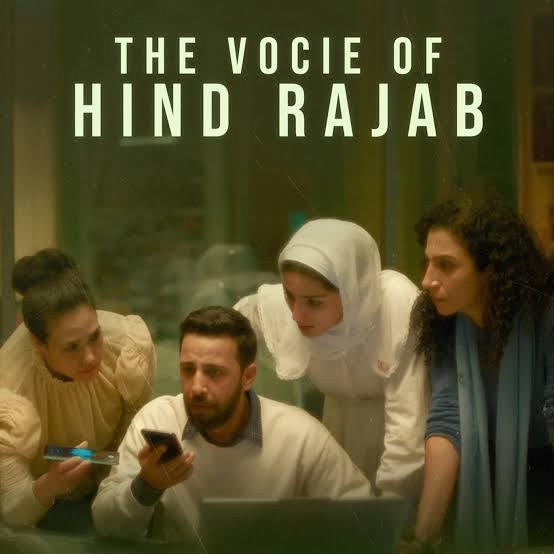
Hind Rajab Film Does Not Find U.S. Distributor. Hollywood’s Anti-Palestinian Bias Is Why

by ADC Team

Despite the acclaim the film has received, “The Voice of Hind Rajab,” which is shortlisted for an Academy Award and won the Grand Jury Prize at the Venice Film Festival, has no U.S. distributor. That is not an accident but, as New York Times columnist M. Gessen noted in her film review, “a kind of coordination” as Israel is the only other country where the film does not have a distributor. 

After the film was screened to great applause at the Toronto film festival, North America’s most important cinema showcase, several distributors contacted the producers for the film’s rights, but then, as Gessen reports, “one by one the companies peeled off.” Instead, the producers have put together a small distribution on their own. As of now, the film is only showing in New York and Los Angeles. 

This follows the failure of “No Other Land,” a joint Palestinian-Israeli documentary on settler violence and ethnic cleansing in the occupied West Bank, to find a U.S. distributor — even after it won the Oscar for documentary feature. 

Compare that to Israeli features, which have found distribution through Paramount Pictures, which has been recently acquired by Zionist media mogul David Ellison. Anonymously, some Paramount employees have criticized the legendary Hollywood studio in an open letter

The letter claims that Paramount has distributed what it calls “one-sided stories,” noting the documentary projects “We Will Dance Again,” “The Children of October 7,” and “As1One: The Israeli-Palestinian Pop Music Journey” in particular. (“As1One” follows a boy band made up of four Israelis and two Palestinians, which was conceptualized by American music executives and formed in Israel. “We Will Dance Again” and “The Children of October 7” focus on Israeli children and attendees of Israel’s Nova Music Festival.)

For clarification, film production companies are numerous, but distribution is a different matter. Production firms often operate on thin margins, and after spending funds to make a movie, they can usually only turn a profit if a distributor buys the film’s distribution rights. Without distribution, the film might not only go unnoticed, but the production’s future solvency may be in doubt. 

This is why the newly founded Watermelon Pictures, created to showcase underrepresented filmmakers, especially Palestinians, is so crucial. Watermelon, for instance, will be the distributor behind “Palestine 36,” about the 1936-1939 Arab Revolt against British occupation and Zionist colonialism, which has also just been shortlisted for an Oscar in the foreign language category. Another Palestine-themed film, “All That’s Left of You,” also an Oscar shortlist, will also be distributed by Watermelon. 

It is not that Hollywood is shying away from Arab films in general. The Iraqi film and Oscar shortlist, “The President’s Cake,” has a mainstream distributor in Sony Pictures Classics. Hollywood, instead, is snubbing Palestinian films, which makes no sense financially since there is clearly an audience for Palestinian stories. “No Other Land,” which, akin to “The Voice of Hind Rajab,” put together its own mini-distribution, accumulated over $2.5 million in the domestic box office, which is an impressive sum for a movie without a major Hollywood backer and shown only in a handful of cinemas. 

For the year 2025, Box Office Mojo ranks “No Other Land” as the 165th-highest-grossing film of the year in their list of the 200 top-grossing films. A film that did worse is “September 5” about the murdered Israeli athletes at the 1972 Munich Olympics, which was distributed by Paramount. “No Other Land” also bested other films with top distributors, ensuring more screens for the film, such as those released by Universal Pictures, A24, and Sony Pictures Classics. Clearly, the refusal to distribute Palestine-themed films is not due to the perceived profitability of these films.

This is ideologically motivated, especially as studios seek to cater to the Trump Administration. Consider that Netflix, which will need the Trump Administration’s greenlight for its proposed acquisition of Warner Bros. studio, recently refused to renew the hit show “Boots.” The show about a closeted gay Marine was deeply popular, but it was harshly attacked by Pete Hegseth’s Pentagon. Conversely, Paramount, which is bidding against Netflix for the same Warner Bros. deal, recently greenlit Rush Hour 4 because Trump is a fan of the franchise. 

All of this underlines that greater concentration in Hollywood is bad for diverse voices. At the end of the day, we need to create our own institutions because the status quo isn’t working for us.

You may also like